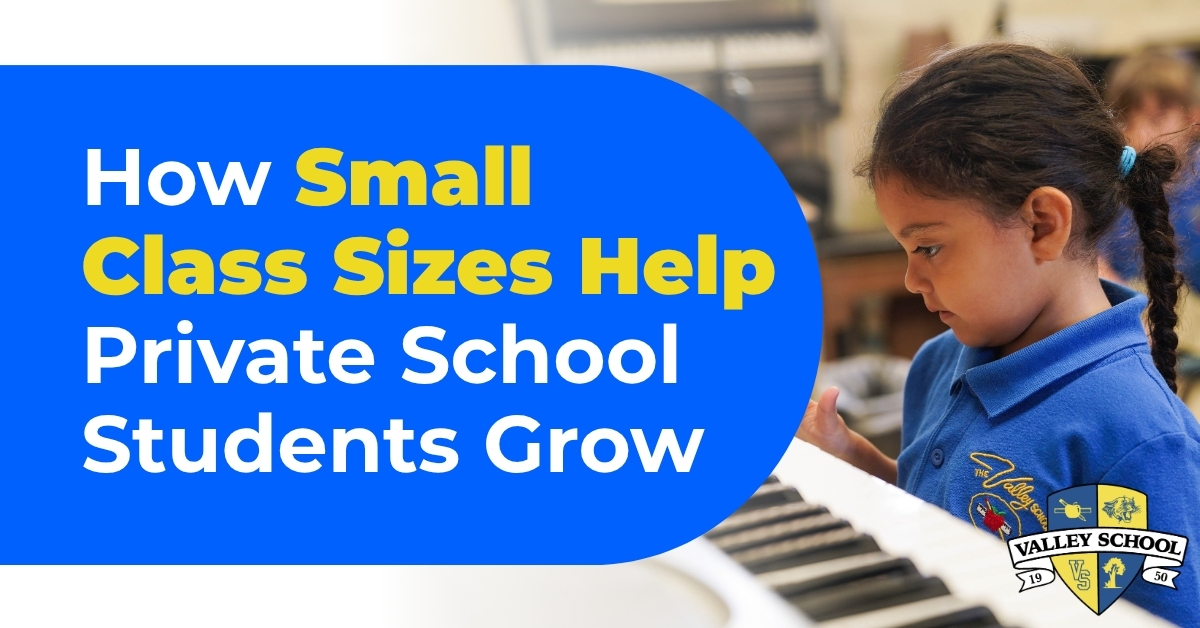
Small classes sit near the top of most parents' school wish lists, and for good reason. Fewer students usually means more room for discussion, faster feedback, and relationships that go beyond a name on a roster. But small class sizes at a private school only pay off when teachers actually use that space on purpose, not just because the room happens to be quieter.
A worksheet shows whether an answer is right. Watching a kid work through a problem shows where the confusion actually started, and what kind of nudge might help. In a smaller class, a teacher has more room to hear a student explain their reasoning out loud and adjust before a small gap turns into a real one. It cuts both ways too: a kid who's already mastered something can get pushed further instead of waiting around for the rest of the room to catch up.
Some kids raise their hand instantly. Others need a minute, or a smaller room, before they'll say anything out loud. A smaller class makes room for both. And participation builds more than confidence, kids learn to listen closely, explain their thinking, and actually revise an idea after hearing someone else's.
In Valley School's middle school, students rotate through specialist teachers for math, English, science, and history, with two classes per grade and no more than twenty students in a middle school class. That structure is meant to pair subject-specific expertise with a class size small enough that a teacher genuinely knows who's struggling and who's coasting.
Kids ask for help more readily when they trust the person teaching them. They also show up more prepared when they know their effort is actually being noticed, not lost in a crowd. The same goes for peer relationships: working with the same classmates across projects and discussions gives kids real practice sharing responsibility and working through disagreements, not just avoiding them.
Push past the number itself. Ask how often kids get individual feedback, how groups get formed, and whether classroom tasks ask kids to actually think or mostly just listen. Ask, too, how the school supports kids outside the core lesson, through enrichment, athletics, or afterschool options, since that's where a lot of the real student experience happens.
It's worth saying plainly: a small class with disengaged teaching isn't better than a larger class with excellent teaching. The number alone guarantees nothing. What actually matters is whether a teacher is using that smaller group to individualize instruction, catch problems early, and build real relationships, rather than just enjoying a quieter room. Ask for specifics, not just the ratio, before assuming small automatically means better.
Smaller classes change how assessment works, too, not just instruction. A teacher with fewer students can rely on more direct observation and conversation to gauge understanding, rather than leaning entirely on tests to catch what a student does or doesn't know. Ask how a school balances formal assessment with the kind of ongoing, informal check-ins that a smaller class actually makes possible. The answer tells you a lot about whether small classes are shaping the whole approach to teaching, or just showing up on an admissions brochure.
Small class sizes at Valley School are built around exactly this kind of intentional teaching, not just a quieter room. Come see it in a real classroom, schedule a tour and we'll show you what a normal day actually looks like.
.png)