
Valley School’s Middle School program (Grades 6–8) offers a dynamic, departmentalized learning experience designed to challenge and inspire. Students rotate through four core subjects (Math, English, Science, and History) taught by passionate specialists who know how to bring each discipline to life. With two classes per grade level and a maximum of 20 students per class, every child receives the personalized attention and support they need to thrive. Our teachers use a blend of instructional strategies, including direct instruction, collaborative group work, and rich project-based learning experiences that spark curiosity and deepen understanding.
Character education is woven into daily life, helping students grow not only as learners but as responsible, confident young people. Afternoons are filled with exciting elective options such as Spanish, study skills, creative writing, music, fine arts, STEM, computers, robotics, artificial intelligence, and physical education. These electives allow students to explore interests, discover new passions, and develop real-world skills.
In addition, our safe, vibrant middle school community encourages leadership, independence, and meaningful connections with peers and teachers. Valley School prepares students for the academic challenges ahead while ensuring they feel known, supported, and empowered every step of the way.

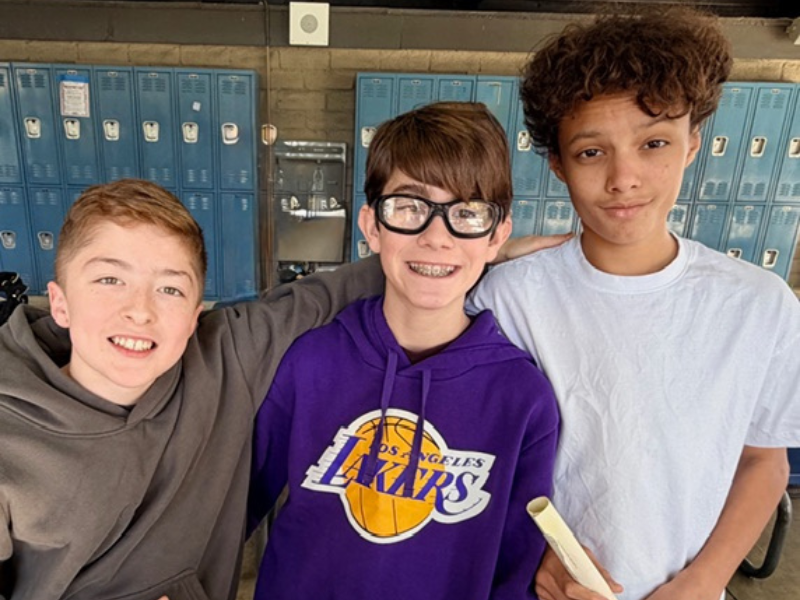
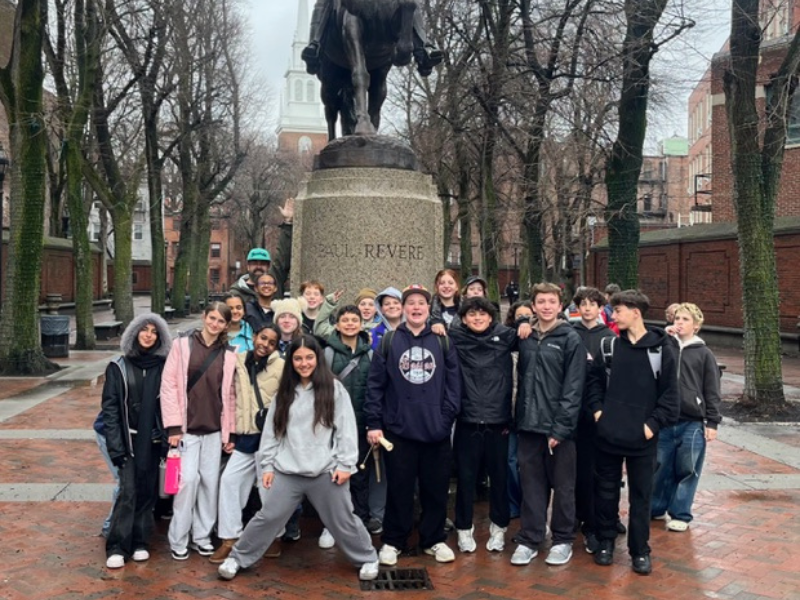
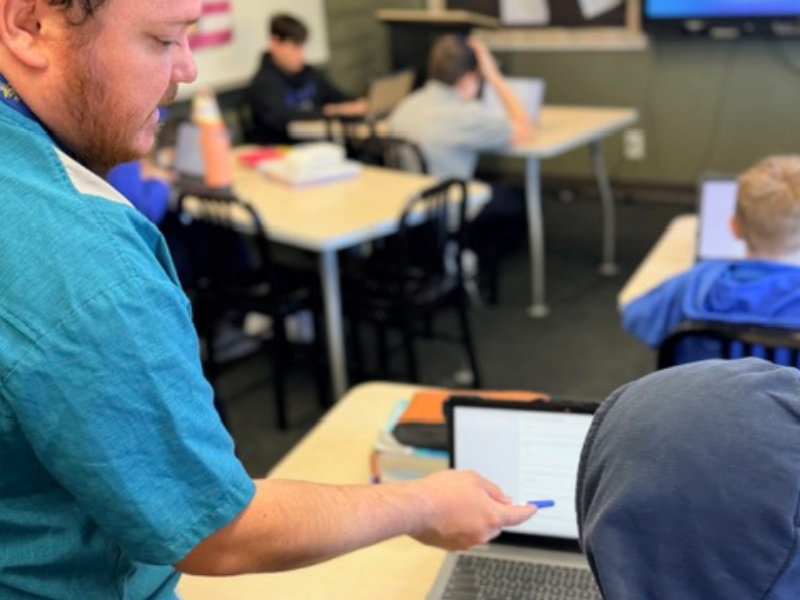
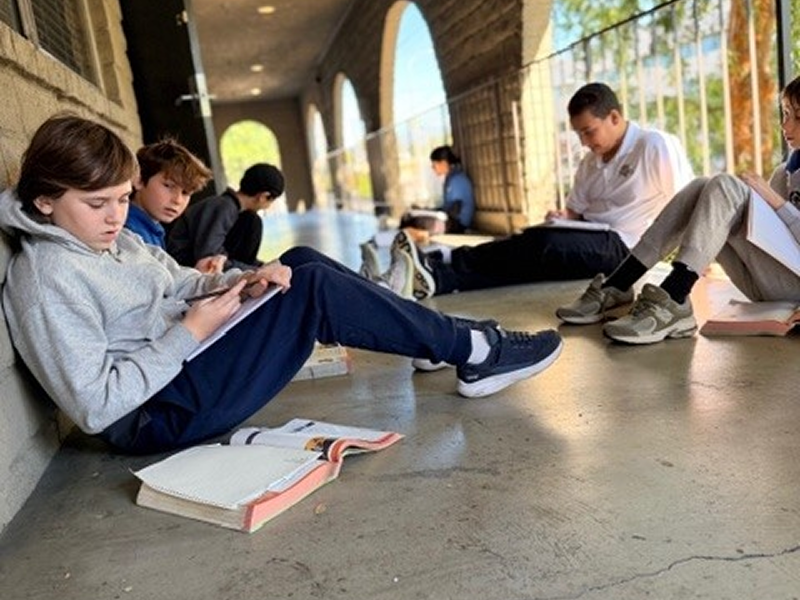
Students in sixth grade English study the elements of literature and move from literal understanding to critical analysis. Sixth grade English introduces students to literary characters in a variety of genres: realistic fiction, historical fiction, science fiction, and non-fiction. Through the themes of coming of age and the journey of the hero, students form connections in each of the various literary selections as they learn different ideas, arguments, and perspectives.
Pre-Algebra - Students begin the transition from arithmetic (concrete) ways of solving problems to a more algebraic (abstract) approach. They begin to look at number relationships and patterns through graphing. Students review and strengthen skills such as decimals, signed numbers and fractions, while working to obtain a better understanding of the logic behind these skills. They are introduced to a variety of Algebra concepts, which includes solving equations using the distributive property and combining like terms. Students learn to explain or justify their processes and results to teammates, which help to clarify their own thinking.
In Sixth Grade History students expand their understanding of history by studying the peoples of the major Western and non-Western Ancient Civilizations. The Sixth Grade study of Ancient Civilization emphasizes nomadic life, human behavior, settlement, “progress,” and the human condition.
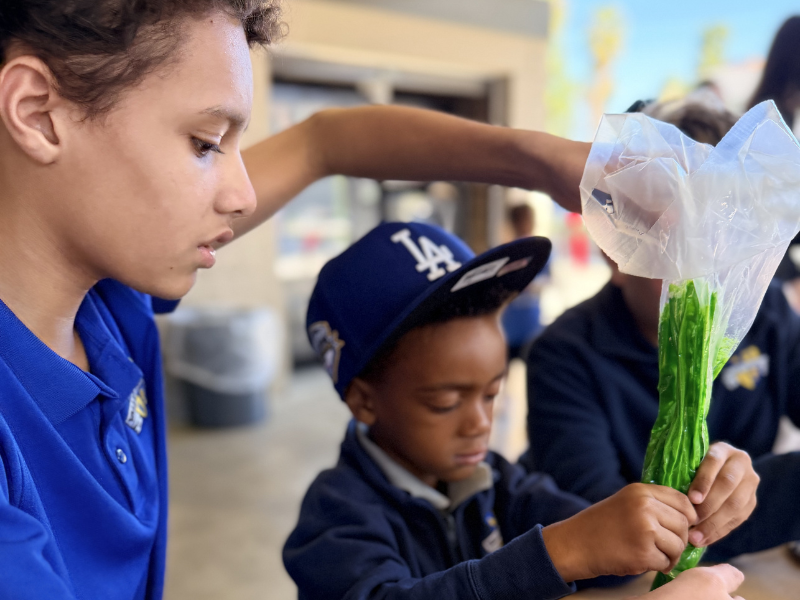
Sixth Grade Science introduces the three disciplinary core ideas of Earth and Space sciences. Sixth Grade units of study include earth’s place in the universe, earth’s systems, and earth and human activity. Scientific progress is made by asking meaningful questions and conducting careful investigations. Sixth grade skills include asking questions, observing, seeking evidence, recognizing patterns and cycles, developing and using models, relating cause and effect, analyzing and interpreting data, designing and constructing controlled experiments, constructing explanations and designing solutions.
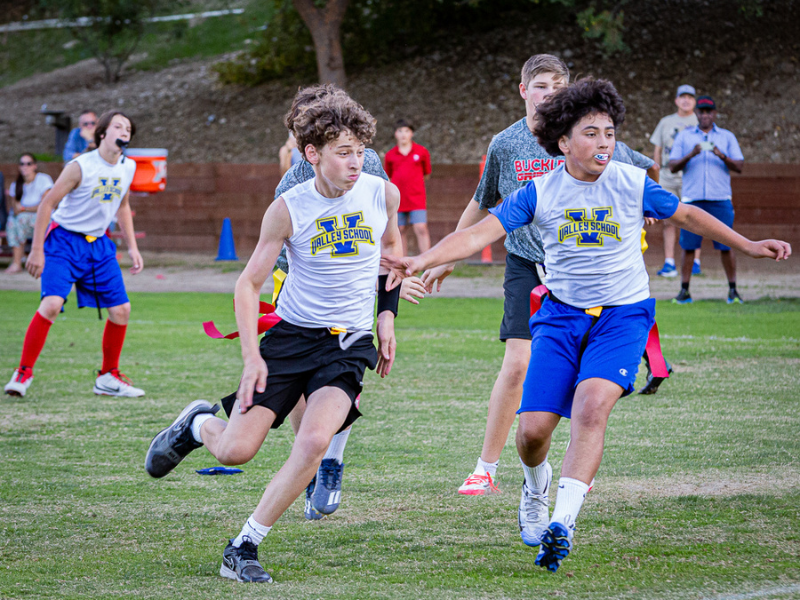
In Sixth Grade the focus of the Physical Education curriculum is on skill development in both team and individual sports. Sports and activities include basketball, track and field, flag football, volleyball, softball, strength training, rhythms, and aerobics. Sixth grade students follow a progressive fitness development program reinforced with a fundamental understanding of human physiology. Fitness instruction alternates with sports programs, and special games and challenges bring the grade together as a whole. Each class begins with stretching and low impact circuit training.
Students in Sixth Grade select one Academic Elective each year, based on students’ interests, teachers’ recommendations, prior performance, and standardized test scores. Final selection of electives involves the mutual agreement of students, parents, and faculty. Letter grades for academic electives appear on students’ transcripts
Seventh grade English exposes students to classic and contemporary literature, emphasizing interpretation, reflection, and analysis. Genre and thematic approaches include topics of courage, self-discovery, and the human condition. Book selections may include works by Karen Hesse, John Steinbeck, Jack London, and William Shakespeare, supplemented by essays, poetry, and short stories.
Algebra - Seventh Grade math promotes mastery of basic math operations using multiple modalities of learning. The teacher presents math skills and processes using a variety of approaches such as manipulatives and guided discovery. Before students move on to higher levels of abstract thinking, we expect them to exhibit competency with fractions, decimals, percents, integers, rational numbers, ratios, proportions, whole number equations, and geometry. The use of calculators enables students to focus on problem solving, rather than on computation. Calculators help students recognize patterns of problem solving and demonstrate the relationship between mathematics and other fields of study.
In seventh grade students study the social, cultural, and technological changes that occurred in Europe and Asia from 100-1789 C.E. In addition to addressing the core curriculum areas outlined in the California State Standards. Seventh grade Social Studies begins with a look at the growth of Rome, its architecture, and political legacy.
We begin the year with a detailed study of the human digestive, circulatory and skeletal systems, actively involving students in a variety of labs such as observing diffusion using dialysis tubing, testing foods for starch, sugars, and caloric content, as well as analyzing liver enzymatic functions. We then move into the study of cells and cellular functions along with the development of microscopy techniques. Following the unit on cell division, we investigate simple Mendelian genetics, culminating with a presentation on specific human inherited challenges.
In Seventh Grade skill development continues in basketball, flag football, track and field, volleyball, and softball. New sports introduced in the seventh grade are hockey and lacrosse. Each day is started with stretching and low impact circuit training. Students in the Seventh Grade participate in the rigorous Presidential Fitness Challenge that pre-tests in five major components of fitness: muscular strength, muscular endurance, flexibility and agility, and cardiovascular endurance. Yearlong personal fitness goals are established, and personal progress is tracked and analyzed in Science classes. Students receive certificates acknowledging their individual accomplishments.
Students in Seventh Grade select one Academic Elective each year, based on students’ interests, teachers’ recommendations, prior performance, and standardized test scores. Final selection of electives involves the mutual agreement of students, parents, and faculty. Letter grades for academic electives appear on students’ transcripts
Eighth Grade English exposes students to significant American writers. Students learn to appreciate the novel in a historical context, witnessing the continuity of the human condition as it applies to their own lives and times. Eighth grade literature focuses on the journey from innocence to experience.
Geometry is a comprehensive course designed to meet the requirements of four year colleges and universities. The aim of this course is to develop an understanding of geometric relationships in a plane and in space, to develop an understanding of the meaning of proof, and to be able to use deductive proof in both mathematical and non- mathematical situations, to develop the ability to think creatively and critically, and to integrate geometry with arithmetic, algebra, and numerical trigonometry.
In Eighth Grade Social Studies students learn to link the past to the present, and analyze and evaluate the events and ideas that have created the American nation. Students are encouraged to view history as a narrative which is pieced together from evidence and the perspectives of interpreters. Students examine historical events through multiple viewpoints.
In Eighth Grade Science students explore the physical world through a meaningful study of Physics and Chemistry. In the course of these investigations students acquire a strong knowledge base in the physical sciences, including opportunities to develop their research, presentation, and scientific writing skills.
Eighth grade classes promote advanced skills and tournament play. Students serve as officials and team captains to focus on correct rules and sport strategies. New sports include team handball and pickle ball. In addition, a unit on beginning hatha yoga successfully builds core strength and self-discipline. Special emphasis is placed on maintaining physical fitness and strength training for success in competitive sports or the activity of choice. A comprehensive peer-teaching unit furthers the cognitive understanding of health-related fitness concepts. They start each day with stretching and low impact circuit training.
Students in Eighth Grade select one academic elective each year, based on students’ interests, teachers’ recommendations, prior performance, and standardized test scores. Final selection of electives involves the mutual agreement of students, parents, and faculty. Letter grades for academic electives appear on students’ transcripts
Applicants for admission are accepted one year prior to the student's enrollment. Schedule a tour or request an application to make Valley School your child's home.
schedule a tour