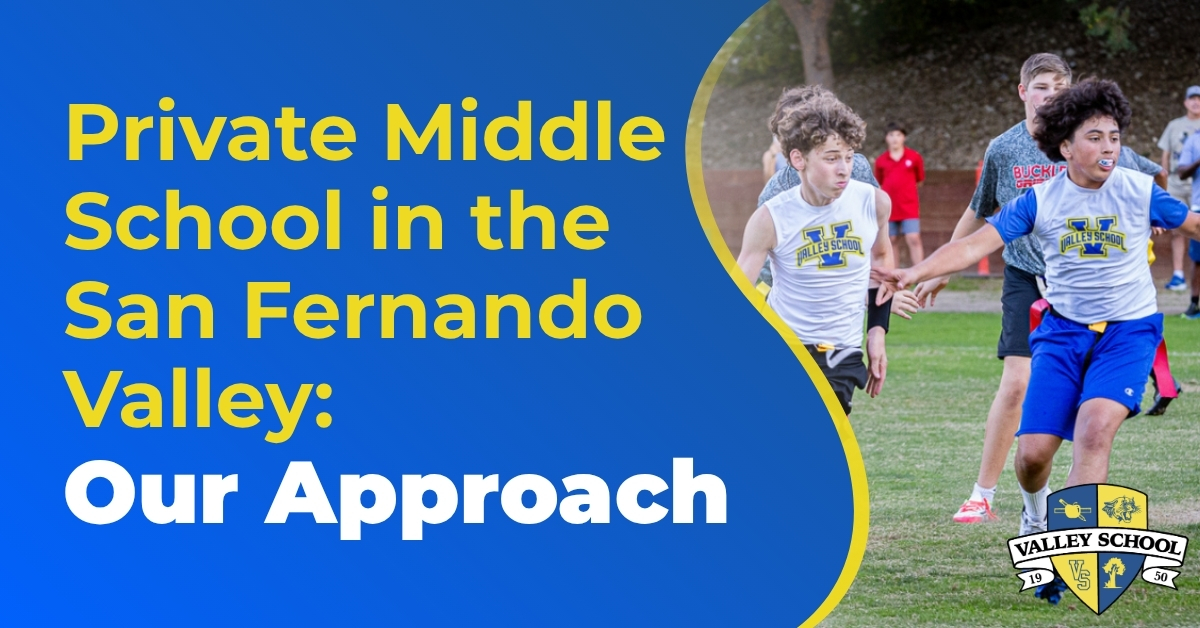
Middle school is a turning point academically, socially, and emotionally, all at once, and families looking for a private middle school in the San Fernando Valley usually want a program that treats it that way instead of just as a bridge to high school.
A strong middle school curriculum, grades six through eight, should hand students more responsibility each year: longer projects, more independent research, higher expectations for staying organized and following through. The point isn't just mastering content. It's walking into a competitive high school already comfortable managing your own workload.
The social side of middle school deserves just as much attention as the academic side. Are teachers actually trained to notice the confidence dips and social friction that come with this age, and to deal with them directly, in advisory time, in one-on-one check-ins, rather than leaving kids to sort it out alone? A middle schooler who feels backed outside the classroom takes more risks inside it.
When middle school is the last stretch of a longer PK-8 program, most students already know their teachers, their campus, their classmates. That familiarity removes one of the biggest sources of middle school anxiety, freeing kids up to actually focus on the growth these three years are supposed to deliver.
In a lot of cities, getting into a strong high school is its own competitive process, and middle school is where that groundwork gets laid. Ask how a school supports eighth graders through high school applications: is there a dedicated counselor, do teachers write recommendation letters, is there guidance on standardized testing if the schools you're considering require it? A middle school that treats high school placement as part of its job, not something families handle entirely on their own, takes real pressure off both students and parents in that eighth grade year.
Middle schoolers are figuring out who they are outside the classroom just as much as inside it, and extracurriculars matter more here than they did in elementary school. Ask what clubs, sports, or leadership opportunities are actually available to sixth through eighth graders, not just what's advertised for the upper grades. A student who finds one thing they're genuinely good at, whether that's debate, soccer, or student government, tends to carry that confidence back into the classroom.
Technology use is one of the more contentious topics for this age group, and schools handle it very differently. Ask whether students are issued laptops or tablets, and if so, what guardrails exist around their use during the school day. Some schools lean heavily on devices for research and typed assignments; others intentionally limit screens in favor of handwritten work and physical textbooks, especially for core subjects. Neither approach is automatically right, but you should know which philosophy a school follows before your child is three months into the year and you're trying to figure out why they suddenly need a laptop for homework every night. It's also worth asking about cell phone policies specifically, since middle school is usually when kids start carrying their own phones, and schools vary widely on whether phones are banned outright, collected during the day, or left to personal responsibility.
Valley School's middle school builds on exactly that kind of familiarity, carrying grades six through eight forward on relationships students already have, so eighth grade ends as the natural conclusion of a story that started years earlier, not a scramble to get somewhere new. Ask us for the middle school curriculum guide, or come see it in person.
Learn more about our PreK-8 program in Van Nuys.
.png)