Core academics deserve the center of the school day, no argument there. But kids also need ways to move, create, and communicate that don't run entirely through a textbook. That's the actual case for private school enrichment programs, not as a reward for finishing the real work, but as part of it.
Art asks a kid to observe, choose, mess up, and try again. Music demands attention to pattern and timing, and it only works if you're actually listening to the people playing next to you. Both give kids a way to show what they understand without needing the exact right words for it yet, which matters a lot for a kid who's still building confidence anywhere else.
Spanish introduces new sounds and perspectives while building actual communication skills, not just vocabulary lists. Technology, depending on the age, might mean typing, research, digital citizenship, or genuine problem-solving rather than passive screen time. Folding these into the regular school day, rather than treating them as a paid extra, means every kid gets access, not just the ones whose families can afford separate lessons.
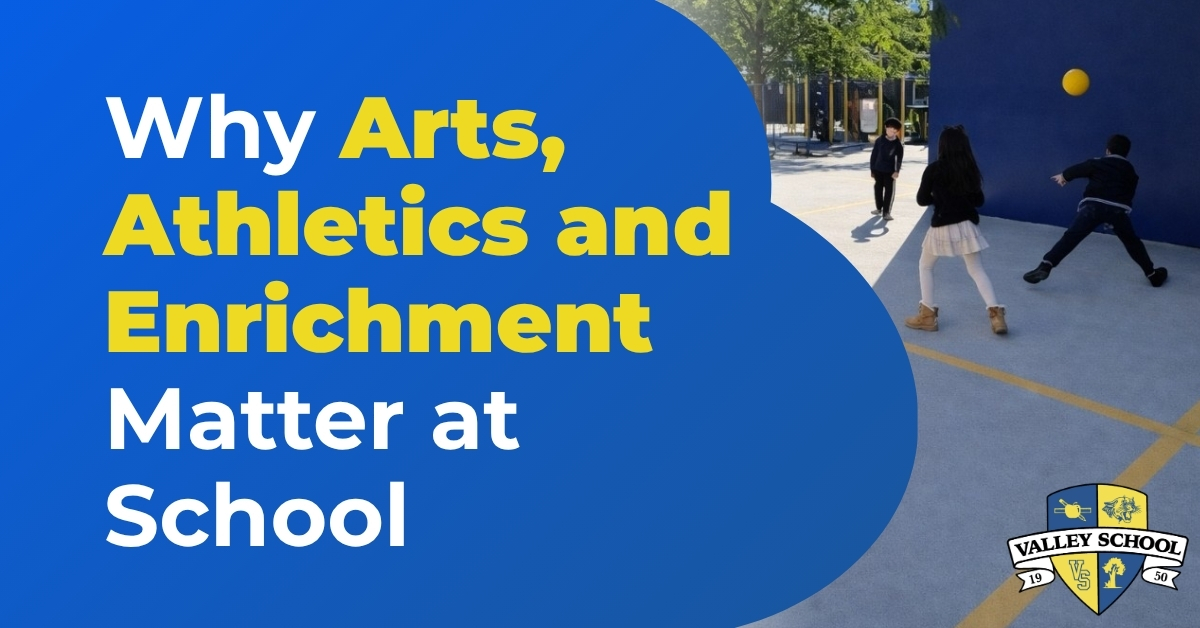
Daily PE builds cooperation, persistence, and the ability to lose a game without falling apart. It also just changes the pace of a school day. Kids come back from moving their bodies more focused, not less, and that shift matters more than people give it credit for.
Exposure matters. A kid who starts out hesitant in a new activity can end up genuinely good at it, given enough low-stakes chances to practice. Ask whether enrichment happens during the regular school day, after school, or both, and whether beginners actually feel welcome or just tolerated. A long list of offerings means less than whether a kid can actually walk into any of them without already being good at it.
Ask to see the actual spaces, the art room, the music room, the field, and ask who's teaching each one and how often kids get real time in them. The right enrichment program isn't about the length of the list. It's about whether a kid walks away from it feeling more capable than they did the day before.
The strongest programs don't treat enrichment as a separate track running alongside academics. A music teacher who talks with the classroom teacher about a student's focus, or a PE coach who notices a kid's leadership on the field and mentions it to the front office, is a sign that enrichment is woven into the whole picture of a student, not walled off as a once-a-week special.
What counts as enrichment for a kindergartner looks nothing like what it looks like for a seventh grader, and it shouldn't. Ask how programs evolve as kids get older, whether a student can go deeper into one interest over multiple years, or whether it resets every September with a brand-new rotation. Consistency over time is often what turns a casual interest into an actual skill, or even a lifelong hobby a student carries well past graduation.
Valley School builds Spanish, technology, art, music, and daily PE right into the elementary schedule, and layers in athletics and enrichment as kids move up through middle school. Come see the programs in action, we're happy to walk you through what a typical week actually looks like from the first bell to the last.
.png)